Thursday, November 6, 2008

On resilience and the financial crises

The Stockholm Resilience Centre reports on 'Buzz' Holling's theory of (ecological) resilience and the importance for understanding the current financial crises:

Politicians and policy-makers all over the world struggle to stabilize the global financial system. But perhaps regulations and command-and-control won´t do much good. Instead, governments should take a closer look at the research on resilience - the capacity of an eco-system to cope with shock and then rebuild and renew itself. For more see here. 

Herman Daly, renowned ecological economist earlier had this to say on the crises:

The current financial debacle is really not a “liquidity” crisis as it is often euphemistically called. It is a crisis of overgrowth of financial assets relative to growth of real wealth—pretty much the opposite of too little liquidity. Financial assets have grown by a large multiple of the real economy—paper exchanging for paper is now 20 times greater than exchanges of paper for real commodities. It should be no surprise that the relative value of the vastly more abundant financial assets has fallen in terms of real assets. 

Seems like Holling and Daly can have a creative chat on finding a balance between regulations, incentives and management designed to improve the overall system and interventions to increase the systems' overall ability to cope with shocks.

For more on Daly's response see here.
For Holling's own reflections on his work see here.

Friday, October 31, 2008

Losing nature's value


From Resilience Science: 

At the IUCN meeting in Barcelona, the BBC interviews Pavan Sukhdev leader of the Economics of Ecosystems and Biodiversity an EU project intending to provide an economic assessment of global ecosystem governance in much the same way that the Stern review did for climate governance:

The global economy is losing more money from the disappearance of forests than through the current banking crisis, according to an EU-commissioned study.

…The figure comes from adding the value of the various services that forests perform, such as providing clean water and absorbing carbon dioxide.

…Speaking to BBC News on the fringes of the congress, study leader Pavan Sukhdev emphasised that the cost of natural decline dwarfs losses on the financial markets.

“It’s not only greater but it’s also continuous, it’s been happening every year, year after year,” he told BBC News.

“So whereas Wall Street by various calculations has to date lost, within the financial sector, $1-$1.5 trillion, the reality is that at today’s rate we are losing natural capital at least between $2-$5 trillion every year.”

…The first phase concluded in May when the team released its finding that forest decline could be costing about 7% of global GDP. The second phase will expand the scope to other natural systems.

See interim report from The Economics of Ecosystems and Biodiversity Project project

Photo: IISD

Thursday, October 30, 2008

Sustainable forestry vs illegal logging

Demand for resources poses opportunities for sustainable resource management. From Environmental News Network:

African nations could turn the demand for their natural resources currently driving deforestation and other destruction into a force for higher returns from sustainable development, WWF has said today.
“Certified, sustainable forestry yields far better returns for companies, communities and Congo basin countries than illegal logging ever will,” said Andre Kamdem, Head of the WWF Green Heart of Africa Initiative.
..
“Our challenge is to put the machinery in place to turn from plunder to preservation of resources and it is in the interests of the world to assist the nations of the green heart of Africa to do this.

From plunder to preservation is hard work. It does suggest some kind of mutual accepted contract (uphold by the rule of law) and an alternative or supportive finance framework. And yes, some respectful clients.

Read more at illegal-logging.info 

Monday, October 27, 2008

Air travel to Africa and climate change

The issue of carbon emissions caused by air travel is becoming an increasingly heated debate. Soon regulating airline emissions could become an integral part of the UK climate change bill.

This raises the question of what would happen in poorer countries of Africa (and elsewhere) which rely on tourism for much-needed international revenue and regard tourism as important part of their development strategy, if tourists would stop coming due to changes in air travel regulations. One helpful suggestion for tourists is given on the topic by an Africa specialist travel agency Rainbow Tours, which forms part of the Ethical Tour Operators Group in the UK:

"It is estimated that one new job is created by every eight tourists, and one job supports up to twenty people. In modern times, flying is an essential part of any trip to Africa, and if people were to stop visiting Africa because of a desire to cut down on flying, the effect on communities would be catastrophic. In many areas, tourism offers the only chance of employment and hope for the future.

Maybe a solution is to travel less and for longer. Make one longer visit, instead of two. We don’t offer long-weekends in Zanzibar, or in Cape Town. Cut out the flights you can afford to go without – to Edinburgh or Paris – and travel by train. Cut out the short-break in Barcelona, turn down the central heating and wear a jumper, but please don’t stop visiting Africa. They need you there."


However, it is clear that this issue also needs to be tackled at an international level far beyond the individual traveler´s decision-making , taking into account the relative importance of tourism for development in a tourist host region and even the much lower average carbon emission levels of the poorer host country rather than only the levels of the country of origin of the tourists.

H/T: Ron Mader - planeta.com, Green Travel Network

Thursday, October 23, 2008

Kenya: Pervasive Poverty and Rising Inequality


From a draft Poverty and Inequality Assessment on Kenya released by the World Bank:

We confirm that there has been some improvement in poverty overall since 1997, but poverty is still very pervasive, especially in rural areas.  Inequality is large and appears to have risen over time.  The  main correlates of poverty resonate with those found in earlier studies – including family size, lack of education and frequency of shocks.    


Image: Slums in Nairobi 
Image credit: Crispin Hughes/Panos, as posted on Environmental Health Perspectives

Economy and the earth


The New Scientist released a special report on how the economy is killing the earth:

THE graphs climbing across these pages (see graph, right, or explore in more detail) are a stark reminder of the crisis facing our planet. Consumption of resources is rising rapidly, biodiversity is plummeting and just about every measure shows humans affecting Earth on a vast scale. Most of us accept the need for a more sustainable way to live, by reducing carbon emissions, developing renewable technology and increasing energy efficiency.

But are these efforts to save the planet doomed? A growing band of experts are looking at figures like these and arguing that personal carbon virtue and collective environmentalism are futile as long as our economic system is built on the assumption of growth. The science tells us that if we are serious about saving Earth, we must reshape our economy.

This, of course, is economic heresy. Growth to most economists is as essential as the air we breathe: it is, they claim, the only force capable of lifting the poor out of poverty, feeding the world's growing population, meeting the costs of rising public spending and stimulating technological development - not to mention funding increasingly expensive lifestyles. They see no limits to that growth, ever.

For a full introduction and some free papers read here.

Wednesday, October 22, 2008

The role of carbon capture and storage (CCS)

An argument for expansion of coal fired power stations often comes with a promise of carbon capture and storage (CCS) technologies, but it is often argued that these technologies are unproven.  A new working paper from DIW Berlin discusses the possibilities of CCS and argues that CCS combined with IGCC could be economically viable at a CO2 price in the range of Euro 30-50/t. CCS for conventional hard coal plants would increase the price of electricity by 3-4 cents (EUR)/Kwh (At an exchange rate of R10 for 1 Euro that is in the range of 30-40c/Kwh). 

The paper highlights that full scale commercialisation of CCS is not expected before 2025-2040. In fact this would also make little economic sense given much cheaper greenhouse gas mitigation options available (see earlier post on Global cost of carbon mitigation).

Tuesday, October 14, 2008

From responsible and sustainable tourism to sports tourism

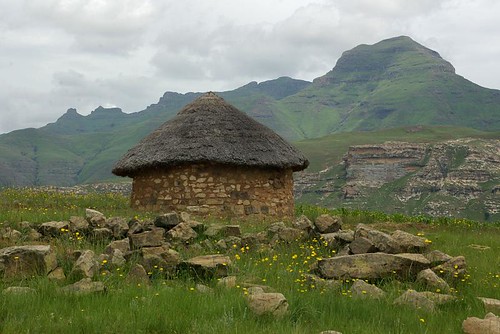
Lesotho Rondavel
Looking further into the topic of tourism and development in Africa, Kurt Ackermann looks at some interesting ideas on how to move towards being responsible and sustainable in tourism saying:

"Being green and responsible is good for business, but getting there - and being able to prove it - can be daunting."

Sports tourism - especially in the form of major events - can be another interesting way that tourism can benefit a national economy, but there are negative environmental externalities. How can we deal with them for the 2010 FIFA World Cup in South Africa? How about with a "Green Goal" (as FIFA started promoting in Germany 2006)?

"Topics included Green Goal principles, stadium greening, biodiversity, landscaping and green procurement, green ratings for the hospitality industry, carbon offset, integrated waste management, the Green Point Park and communication."

Photo: Kurt Ackermann from the Ecotourism Africa flickr group
H/T: Afrikatourism

Thursday, October 9, 2008

Public perceptions on nuclear power


It is no secret that Eskom intends expanding nuclear capacity in South Africa (see here), but what do people think about nuclear nowadays?

A recent poll (focussed on Americans though) suggests that support for building nuclear power plants is very divided, but that almost three-quarters are concerned with radioactive waste:

A new Harris Poll finds that 49 percent of Americans are in support of building more nuclear power plants as opposed to 47 percent in 1979 – virtually unchanged. As both U.S. presidential candidates have taken a stance on this issue, public support and/or opposition will be critical to the future of nuclear power in America. While a third of Americans are still opposed to new nuclear plant construction, this opposition has decreased by 13 percent (from 45 percent to 32 percent) since April 1979 just after the accident at the Three Mile Island nuclear power plant on March 28, 1979. Prior to that incident, a series of Harris Polls found that substantial majorities of American adults were in favor of building new nuclear power plants.
...
Some of the key findings of this new Harris Poll are:

A 49 percent to 32 percent plurality of adults favor building new nuclear power plants, with 23 percent strongly favoring them and 16 percent strongly opposing them.
A 72 percent majority of adults see the disposal of radioactive waste as a major problem. Smaller majorities see the escape of radioactive materials affect people’s health (56%) and in the atmosphere (51%) as major problems.
Overall, however, substantial majorities now (67%) as in 1979 (also 67%) believe that nuclear power plants that produce electricity are safe.

One interesting, possibly surprising, finding is that support for building new nuclear power plants increases with age. Majorities of the two oldest generations, 63 percent to 24 percent of "Matures" (aged 63 and over) and 52 percent to 31 percent of Baby Boomers (aged 44 to 62) support building new nuclear power plants, Only 35 percent of Echo Boomers (aged 18 to 31) and 47 percent of Generation X (aged 28-43) do so. Why is this surprising? Because Matures and Baby Boomers were aged 14 or older in 1979 and are presumably more likely to remember Three Mile Island.

Public perception is an important issue (read all about South Africa's own particular issues) but for now it seems as if the current financial and political instability is a greater immediate obstacle to Eskom's planned nuclear expansion programme.  

Monday, October 6, 2008

Shame on us


UNICEF released The State of the World's Children 2008.  

Overall much progress has been made with reducing infant mortality over the last few decades. Even in sub-Saharan Africa, with persistently high infant mortality rates some progress has been made. Painfully, South Africa is one of the few countries where things got worse between 1990 and 2006. 

South Africa was ranked 55th worse out of 189 countries on the under 5 mortality rate, a critical indicator of the well-being of children.  69 out of every 1000 children under 5 will probably die in South Africa-  much more then the 46 in Iraq (yes, I have double-checked) or the 22 in Occupied Palestinian Territory.  

What is worse is that South Africa slipped from a still unacceptably high probability of 60 out of every 1000 children in 1990, and what is worst of all is that much of this could have been prevented, especially given South Africa's relative high levels of wealth. See earlier post: Shocking statistics on maternal, newborn and child mortality in sub-Saharan Africa

There is something terribly missing in the South African recipe.  To care.  

Here's a simple way to start: value and reward all of those who are caretakers.

Image: WHO

Should water be priced according to its market value?

The Economist hosts a debate with the following proposition: "Water as a scarce resource should be priced according to its market value". Go and join a lively debate!

This was my comment:

Freshwater is becoming increasingly scarce. An important benefit of responding to this increasing scarcity with flexible water tariffs is that consumers can respond in a manner of their choice - paying the increased amount, installing water saving technology, reducing their use or a combination of several response options. Too low water tariffs also affects quality of service and it is usually the poor who suffer the most. 

Being flexible and having options in a complex world of wet and dry cycles is a huge benefit. Inflexible water use restrictions create huge losses of welfare and are often implemented too late and after periods of a false security created by low water tariffs. 

It does not end here though. Everyone on earth needs water to live. Governments need to step in to ensure that everyone has access to sufficient water for his/her basic needs. The South African Water Act for example clearly makes this distinction and sees no conflict between the provision of water for basic human needs and the clear need for economically efficient allocation of a scarce resource for productive and consumptive purposes. 

I have voted pro, but under the proviso that the basic needs of all people (and the functioning of the environment) is taken care of.

From inclusive growth to inclusive discussion.

The Commission on Growth and Development started a new weblog:

The Growth Blog is a forum for you - the policy maker, the academic, the student, and the interested citizen of the world - to agree, disagree, or simply to engage current practitioners on policies and issues critical to development. This platform was inspired by the series of meetings that the Commission on Growth and Development held around the world over the course of the last two years. Of the many lessons that emerged in the deliberations, the one that stands out is that inclusive growth requires inclusive thinking, and inclusive discussion. 

See here for an earlier post on the Commissions refreshing approach to growth, poverty and the environment.

Thursday, September 18, 2008

Best books on Africa


I searched for the best reads on Africa. 

Here are the recommendations from: 
Amazon UK

As posted on About.com, the 97 authors on the full list of  best 100 creative books are associated with the following countries: Algeria (3), Angola (3), Benin (1), Burkina Faso (1), Cameroon (2), Cape Verde (1), Congo (1), Cote d'Ivoire (3), Democratic Republic of Congo (2), Egypt (6), Ghana (7), Guinea (3), Guinea-Bissau (1), Kenya (3), Lesotho (1), Mali (1), Morocco (2), Mozambique (4), Nigeria (10), Senegal (10), Sierra Leone (1), Somalia (1), South Africa (19), Sudan (1), Tanzania (1), Tunisia (1), Uganda (3), Zimbabwe (5).

Interestingly most authors are from South Africa, Nigeria and Senegal:

Wednesday, September 17, 2008

Cap, auction, trade

Earlier experiments in Europe with carbon cap-and-trade systems have drawn wide critique for their limited environmental effectiveness.  The EU plans to start auctioning permits in the next phase, sending a real price signal to the market. 

Prof Lans Bovenberg wrote on VoxEU:

The EU plans to auction permits for the next phase of emissions trading, rather than giving them away for free as in the past. This column explains why the new scheme is a significantly better policy and proposes compensation measures to redress the complaints of industries opposed to the new climate change policy. Harmonised EU action may be required.

Read here for full article.

Monday, September 15, 2008

On the municipal price of water


Too low prices for water affects quality of service and have detrimental impacts on the poor. Lessons from India as discussed on Aguanomics:

Municipal water in India, for example, is priced so low that revenues rarely cover the operating costs much less the capital costs of drinking water supply. As a consequence, there is never enough incentive to conserve water and never enough money to maintain the water lines. Consequently, leakage rates (Unaccounted for Water Losses) frequently approach 70%. Ironically, the prices are kept low in the name of protecting the poor but the poor are rarely even connected to the water lines and they wind up gathering water from hydrants or vendors at costs per kiloliter 10 to 20 times as much as that charged to their wealthier neighbors.

Furthermore, while the low prices may seem like a bargain for the middle and upper income consumers, the combination of high leakage rates and poor service mean that most people only receive water for a few hours per day. 


Sinophobia is rive!

Fuel on the fire of sinophobia:

"In the greatest movement of people the world has ever seen, China is secretly working to turn the entire continent into a new colony."
Read the full story in thisislondon.co.uk. The direction of change in China and the dire need for Africa's own rules of engagement is nowhere mentioned. Africa can play the poor beggar again and blame Chinese colonialism for anything that can go wrong or see the Dragon as an economic opportunity, fully realising that there are risks that can only be managed when Africa's own house is in order.  Two parties sign the deal. 

Image: bbc

Friday, September 12, 2008

In Africa, climate change = adaptation

Policy debates on climate change focus almost exclusively on a scientific understanding of climate change and the mitigation of greenhouse gases.  Adaptation, although officially part of the debate, has not really made an impact. This is changing - read the full article in The Economist.

A striking illustration in this same article depicts the inequality in greenhouse gas emissions: 

With the possible exception of a few large scale emitters,  adaptation is the name of the game in Africa. See earlier posts on the ability of African farmers to adapt in the face of climatic changes and that Africa is particularly vulnerable to climatic changes (see also here). 

Wednesday, September 3, 2008

Africa's elusive middle class

A recent blogpost on 'Africa is a Country' stating that Africa has a middle class of 300 million people seems somewhat optimistic.  Digging a bit deeper solved the mystery. The source article from the Washington Post on Africa's new middle income consumerism, defined these 300 million as: 

"...a modestly growing segment of sub-Saharan Africa -- upwardly mobile, low- to middle-income consumers. The group includes working Africans who make as little as $200 a month, a paltry sum by Western standards, yet hardly the $1 or so a day in earnings that describe life for about half the continent's population. Perhaps a third of all Africans, or 300 million people, fall into a middle category -- people struggling to put their kids through school and pay rent, but able to buy a cellphone or DVD once in a while."

According to an earlier article in the Wall Street Journal, posted on Yale Global Online:
The World Bank estimates the sub-Saharan middle class will be 43 million strong by 2030, up from 12.8 million in 2000. Though the bulk of the continent's middle-class consumers are in South Africa, growing markets in such countries as Zambia, Nigeria, Kenya and Ghana are attracting attention from investors around the world.

$200 per month is poverty - even in Africa.  

Thursday, August 28, 2008

Map on water poverty

Another interesting map from UNEP on freshwater resources.  Africa, despite vast freshwater resources is still very water poor mainly due to challenges with access, capacity, use and the environment.

The definition used to compile the map is as follows:
Freshwater, as a natural resource, represents a fundamental key to sustainable livelihoods - for health, economy and development. The water poverty index (WPI) is an aggregate index, describing the lack of freshwater. The index is calculated based on five components: resources, access, capacity, use, and environment, using indicators describing these.

Source:
Water poverty index, by country in 2002. (2006). In UNEP/GRID-Arendal Maps and Graphics Library. Retrieved 09:58, August 28, 2008 from http://maps.grida.no/go/graphic/water-poverty-index-by-country-in-2002.

Economics of broadband


(Serious) broadband is finally coming to Africa.  It is expected that the speed of connectivity will increase and the price of connectivity will drop.  This brings local infrastructural challenges, but on average is expected to increase business opportunities in especially the IT sector (See How Seacom will change SAs world).  A recent analysis by InfoDev and the World Bank highlighted the high prices of broadband in sub-Saharan Africa, highlighting the need for better service and more competition in broadband services in this part of the world.

A question worth asking is what the expected additional socio-economic gains of increased broadband will be, and whether there will be any clear winners and clear losers.  The academic literature for example points to the social benefits of national information infrastructures and the importance of information and knowledge as key business assets.

The message is that in an increasingly connected world the ability to manage these connections to the benefit of the enterprise becomes increasingly important.  Not only the private enterprise, but also society is expected to benefit. Not to be connected means to fall further and further behind relative to the rest of the world. One important question is by how much we will benefit, and whether everyone will be better of.

In an empirical study done by the Economic Development Administration in the US on the impacts of broadband on the economy, it was argued that "broadband access does enhance economic growth and performance, and that the assumed economic impacts are real and measurable". The study concluded that "...between 1998 and 2002, communities in which mass broadband was available by December 1999, experienced more rapid growth in employment, the number of businesses overall, and business in IT intensive sectors, relative to comparable communities without broadband at that time". The study hastens to point out that broadband have to be used and not only be available, making the case for broad-band related policy interventions also focussed on demand side issues such as training. Estimated tangible magnitudes for this study are as follows:
- Broadband added 1-1.4% in the employment growth rate
- Broadband added 0.5-1.2% in the number of business establishments 
- Housing rents are 6% higher in areas where broadband is available
- Broadband added 0.3-0.6% to the share of establishments in IT intensive sectors
- Broadband reduced the share of small (defined as <10>

Increased broadband is expected to bring benefits to private enterprise and to broader socio-economic development, but local negative effects on smaller industry sectors will have to be managed well.  The magnitude of the benefits will also differ from area to area. 

Monday, August 25, 2008

On limits to growth, again

Some wisdom from the Environmental Economics blog: "...there are limits to unsustainable increases in per capita incomes but no limits to sustainable increases in per capita incomes."

As elegant as this quote may look it brings us back to the question that keeps haunting us at least since the Brundtland report: 

What do you mean with sustainable?  

This also makes me think about that guy who, on hearing that we wrote a book called Sustainable Options, sarcastically asked what we are sustaining.

Ultimately it depends on your value system I guess.

Friday, August 22, 2008

On Cape Town's Monopoly vote

In contrast to Cape Town's relatively low cost of living when compared to international destinations, the City was voted third most expensive in the new edition of Monopoly.

The following cities were selected:
Dark blue: Montreal, Riga
Green: Cape Town, Belgrade, Paris
Yellow: Jerusalem, Hong Kong, Beijing
Red: London, New York, Sydney
Orange: Vancouver, Shanghai, Rome
Magenta: Toronto, Kiev, Istanbul
Light blue: Athens, Barcelona, Tokyo
Brown: Taipei, Gdynia


The euphoria of having Cape Town on the board game probably overshadows this minor misrepresentation.

On reflection,  Monopoly games can have quite an impact. For instance, I can't help thinking of Eloff and Jan Smuts streets as very expensive and Musgrave Road as the worst place to be (apart from the jail of course).

Wednesday, August 20, 2008

More income, more energy consumption.

Gapminder never fails to amaze. This time an excellent dynamic representation of data on energy consumption and income from 1965-2007.

Sunday, August 17, 2008

Ecotourism as development option for Africa?


Thank you, Martin, for this opportunity as guest blogger to follow up on a question asked in an earlier blog entry (Is ecotourism a development option for Africa?) and coinciding with the closing date for the Imvelo Awards (for responsible tourism in South Africa).
Tourism - including rural tourism and ecotourism (some definitions) - have become important in the economy of many African nations. Mass Tourism has been notorious for concentration of profits by foreign owners or a local elite and we should seriously look at options of how tourism can assist in equitable development. This is where community-based and eco-tourism can be of interest for development in Africa.
Just like other “miracle” development plans involving the “green revolution” (in the late 1960s and resurfacing again and definitely not convincing all) or “the informal sector” in the past, ecotourism struck a chord with governments and NGO`s as an “easy” option for community development and reducing poverty. Yet such “miracle” solutions tend to promise more than they can deliver, especially if proposed as isolated one-track development options. Over-enthusiasm often ends up with very unimpressive results (like in this very critical article about Latin America) or causes unexpected side-effects which need to be addressed (one suggested way is working towards fair trade in tourism).

However, if tourism forms part of a multidimensional development strategy rather than an intended “miracle” solution for poverty, it can certainly be interesting for development. This is especially interesting on a local level in communities with a certain set of basic conditions. To mention a few:
· A reason for tourists to visit.
· Reasonable access from existing tourism centers.
· A group of people committed to invest many working days with low or no short-term returns.
· A real interest in offering sustainable and responsible tourism.
· An understanding of the concept of quality service.
· Social cohesion and internal organization.
· An understanding of the importance of communication and promotion.
(Ignoring these last two so often leads to failure that they are worth looking at in more detail in a future blog entry)
written by Gerhard Buttner
Photo: Wupperthal, South Africa (part of Africa ecotourism flickr group)

Friday, August 15, 2008

Do Americans believe in global warming?

A new report released by the Brookings Institute based on interviews with 1500 Americans came to the following conclusion:

This report offers preliminary evidence regarding the factors that lead individuals to believe that the Earth is warming.  Declining polar ice and glaciers along with individual experience with warmer local temperatures appear to be significant reasons why Americans believe global warming is occurring. Dramatic events that receive massive media attention, such as horrific hurricanes and blockbuster documentaries, appear less consequential. But there are significant differences in responses of various subgroups divided by place of residence, partisanship, gender, and age, suggesting that no across-the-board consensus on climate change has emerged at the time when federal institutions are giving unprecedented attention to this issue.


Polar ice and local temperatures are the major determinants. There is an important caveat though: the report further points out that this is not the case for those voting Republican.

Interesting. Are people's underlying value systems and interpretations of how the world works so 'hard-wired' that no amount of hurricanes, blockbuster movies, evidence of polar and glacier melting or computer modelling will easily change that?


Policies for a complex and dynamic world


This week I had the opportunity to work with a progressive provincial department on the nature of policies and policy making processes for the environment.  This is a summary of the paper we are writing on the issue:


The policy making process is traditionally viewed as a linear three stage process of problem identification, policy formulation and implementation.  The focus is on the correction of failures in markets or in the broader society and motivated by a desire for change towards a better outcome.  Another feature of the traditional approach is that the policies are designed to achieve normative criteria such as economic efficiency, environmental effectiveness and social justice and are finally usually based on an inflexible view on how humans behave. This deterministic, normative and behavioural simplistic view on the policy making process is applicable in a certain, closed world where policy is viewed as a means to steer society to a desired optimum equilibrium.  This may be an applicable approach in systems with very small degrees of freedom, but becomes increasingly deficient in broader and temporally sensitive real world complex and dynamic open systems, where there is little, if any, basis for future certainties on the emergence of events or the desirability of certain states above another.  This paper acknowledges the increasingly complex and dynamic nature of human-environment interactions and outlines the elements of a more nuanced alternative model for policy design and the policy making process in complex and dynamic applications.

Can Zimbabwe fall any further?

Read a gripping account on Zimbabwe's fate on this blog by Eddie Cross, who is part of  "... a Zimbabwean family with deep roots in Zimbabwe".  

Eddie has posted since October 2006.

Wednesday, August 6, 2008

Updated graphs on poverty, 1980-2005

Just above 40% of Africans live under $1 per day: 

Most income poverty is rural:

Tuesday, August 5, 2008

Sydney's expensive water


In a recent post on 'The wisdom of water restrictions in Cape Town' the point was made that certain response options are more costly then others.  Sydneysiders are starting to feel the pinch of an expensive desalination plant.

As reported in the Sydney Morning Herald two environmental economists quantified the costs. Most households  will pay 25% more for the water they actually use up to 2010 - amounting to 'a shockingly large' $700 per household.  

The solution is in a more flexible pricing regime for water:

The alternative to building a desalination plant is to price water flexibly so that when water storages are low households pay more, and when water storages are high households pay less. In other words - just like we do with items such as bananas - we should pay more when it is in short supply. The extra revenue from charging higher prices when there is less water in the dams could be used to decrease fixed water charges and/or provide assistance to low-income households independent of their water consumption.

At current dam levels, flexible pricing would mean a water price for consumers of $1.30 per thousand litres. Postponing this investment generates very big savings for water consumers and avoids environmental losses that may occur from operating the plant. Provided that water is priced flexibly, we show that the desalination plant would only need to be built when water storage in the dams was at 21 per cent capacity. This has a less than one in three chance of occurring over the next 15 years.

In parched South African cities we should learn from this. Building expensive supply options might actually cost more then having flexible tariffs. It is at least worth looking at.


H/T: Oikos

Corporate welfare?


With an estimated 12 million South Africans on welfare, persistent poverty and increased pressure on expanding the welfare system, an important question is how future 'care' will be financed. Will the private sector come to the rescue?

Anthony de Jasay provides some insights into this question for European welfare systems in his article Topping up welfare:

Throughout Western Europe, redistribution remains an electoral must. Right practices it no less than Left. However, the doctrinal climate in which it flourishes is undergoing a change. Capitalism is still condemned as selfish, inegalitarian and chaotic, but it is no longer treated as the evil that must be uprooted, destroyed and replaced by the purposeful, responsible and just socialist order. It is only the half-crazed, wild-eyed intellectual flotsam that still clings to the old dreams of doing away with exploitation. More and more socialists quietly realise that since private industry is better at exploitation than state-owned enterprises, it is better at capital accumulation too, and will create more riches for governments to lay their hands on.
..
Lately, however, it has dawned even on left-leaning politicians and union leaders that there is a trade-off between redistribution and economic growth. One cannot have both an extensive system of welfare provision in kind, complex protective regulation, high taxes and endemic budget deficits as well as low unemployment, technical progress and vigorous growth. Scared a little by the perspective of stagnation or breakdown, since before the turn of the century Britain, Holland, Sweden and Germany have tried to put a brake on the luxuriant spread of the welfare state. The share of GDP taken by government and the social welfare agencies seems to be levelling off. The European average is now hovering at just over 40 per cent, with Germany at 44, Britain at 45, though France is still defiantly leading the pack with 54 per cent.
..
The "Third Way" that Tony Blair learnt about from his sociologist guru Anthony (now Lord) Giddens (and that Vaclav Klaus branded the fastest way to the Third World) included the idea that business enterprises did not belong to their owners alone. Along with its shareholders, a corporation had other "stakeholders" to whom it owed some responsibility and who ought to have a say in its conduct. Employees, suppliers and customers were the obvious ones, but the townspeople, cultural and educational institutions, the environment and for that matter the whole nation had a "stake" in each business and it was management's clear duty to respect these stakes.
..
Corporations are sternly asked to be "good citizens", though only individuals can do that. Managements do yield to this moral pressure; doing so passes for "best practice" in most business ethics courses. The net effect is that state provision for welfare and good works, running at a level that stretches government finances to critical limits, is topped up by the private sector without taxation and budget deficits being further increased.

Corporations can certainly play an important role in the provision of social goods, but corporations, by their very nature, are highly unlikely to become pseudo-welfare organisations. The question is more about finding a balance between cooperation and competition, between state and market and between production and redistribution.  

The traditional economic theoretical division between state and market does not help in providing structure and function to such an emerging theory.

Image from fourletterword.